
Studies show that the front door is the single most influential factor in a home’s curb appeal, often accounting for up to 7% of its total perceived value. Despite this, many homeowners and developers treat doors as mere functional afterthoughts rather than architectural opportunities. Choosing the right entry or interior transition isn’t just about security or privacy; it’s about setting a tone for every person who crosses the threshold. If you’ve been staring at a dated, builder-grade slab and wondering how to elevate your space, you’re in the right place. We’re going to explore modern door design ideas that bridge the gap between high-end aesthetics and everyday durability.
Minimalist Interior Door Styles
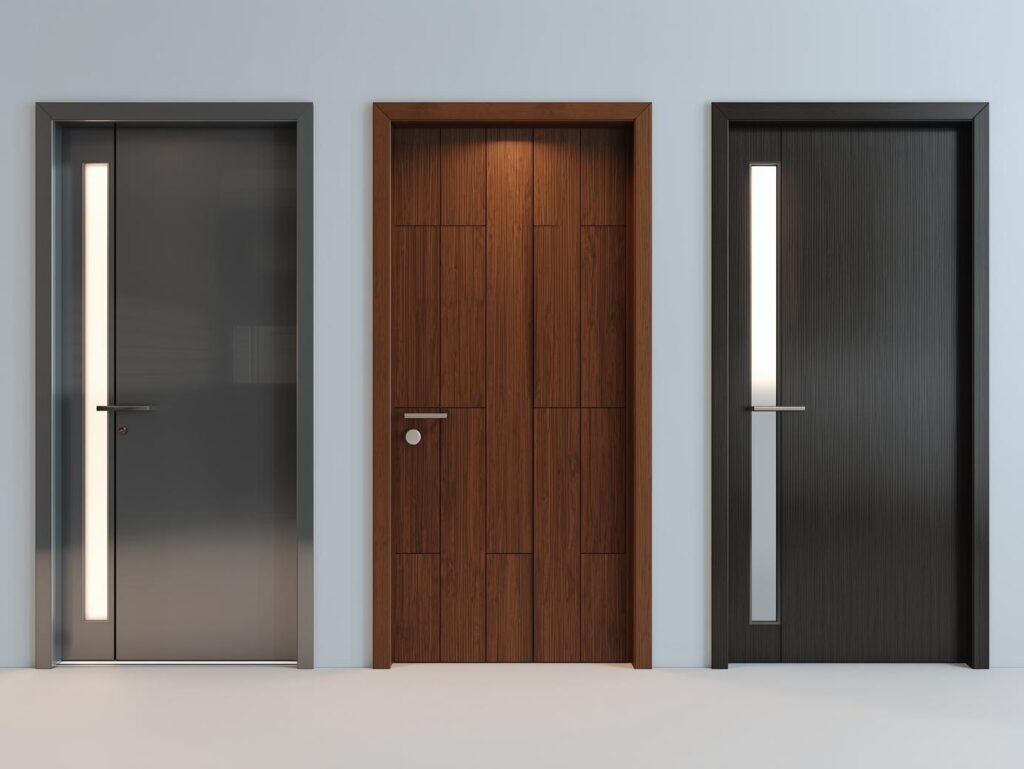
The modern home thrives on the absence of clutter, and that philosophy extends directly to your interior passageways. In my experience, the shift toward minimalist door design ideas has moved away from heavy, ornate moldings toward flush surfaces and hidden frames. This look creates a sense of continuity where the door almost disappears into the wall when closed. It’s a sophisticated choice for architects who want the focus to remain on the volume of the room rather than the hardware.
But what about the details? Even a minimalist door needs character. Instead of traditional raised panels, look for subtle routed grooves or contrasting wood grains. A popular trend involves using vertical grain white oak or walnut, which adds warmth without the visual noise of traditional carvings. These designs work best when paired with slim-profile handles in matte black or brushed champagne gold finishes.
When planning a minimalist interior, consider these elements:
- Floor-to-ceiling heights to emphasize verticality.
- Hidden or “ghost” hinges that remain invisible when the door is shut.
- Solid core construction to ensure a premium, heavy feel during operation.
- Integrated magnetic latches for a silent, click-free closing experience.
Taking this a step further, the door becomes a sculptural element. By removing the traditional casing and using a drywall-return frame, you achieve a level of architectural purity that standard installations simply can’t match. This leads to an important question: how do you balance this subtlety with a front entry that needs to grab attention?
Bold Front Entry Statements
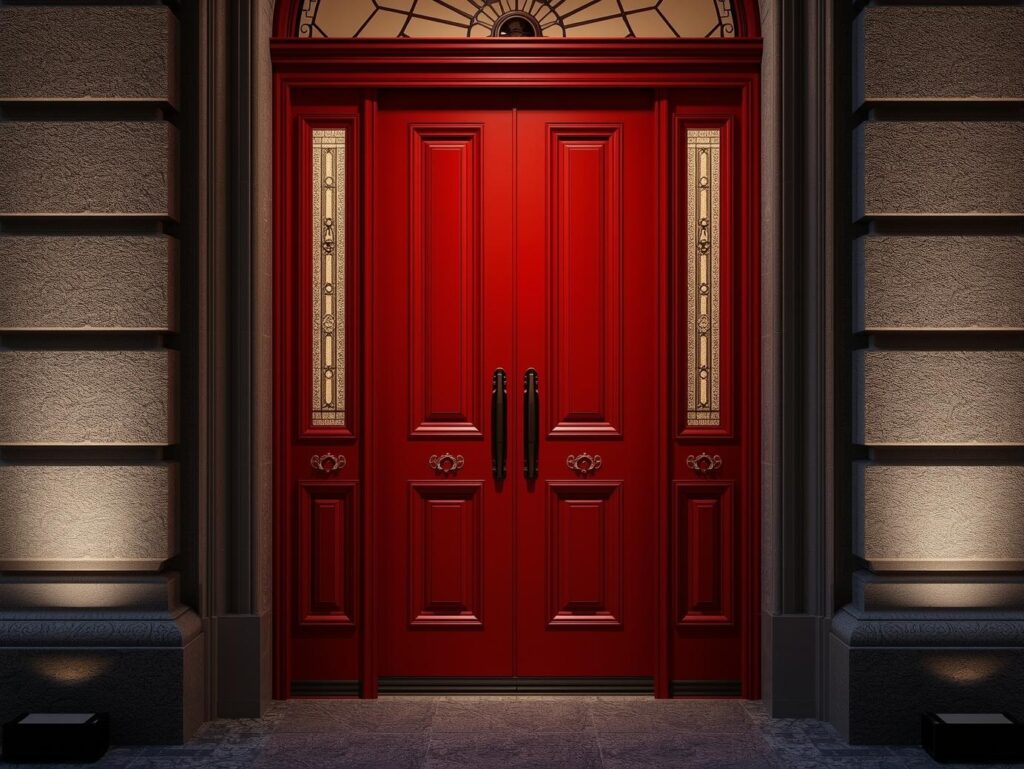
Your entry door is the handshake of your home. It’s the first thing guests touch and the last thing they see as they leave. While interior doors often benefit from blending in, front door design ideas should focus on making a deliberate, confident statement. I’ve seen a massive surge in the popularity of oversized pivot doors. Unlike traditional hinged doors, pivot doors rotate on a spindle, allowing for much wider and heavier slabs that feel incredibly smooth to open.
Case in point: a five-foot-wide pivot door made of steel and glass can transform a standard facade into a modern masterpiece. It communicates luxury and intentionality immediately. However, you don’t need a massive pivot to make an impact. Even a standard-sized door can stand out through the use of bold colors or unique textures. Deep navy, forest green, or even a sophisticated charcoal can provide the necessary contrast against a neutral exterior.
If you’re looking to upgrade your entry, keep these factors in mind:
- Use natural light through side lites or glass inserts to brighten the foyer.
- Choose high-quality hardware like long pull bars instead of traditional knobs.
- Prioritize weather stripping and thermal breaks for energy efficiency.
- Opt for multi-point locking systems to combine style with high-level security.
Here’s the thing: a bold front door requires a balance of form and function. While a glass-heavy design looks stunning, you must consider privacy. Using frosted or reeded glass allows light to filter through while keeping your interior hidden from the street. Armed with that knowledge, we can look at how to handle the interior spaces where a swinging door might actually get in the way.
Space-Saving Sliding Door Solutions
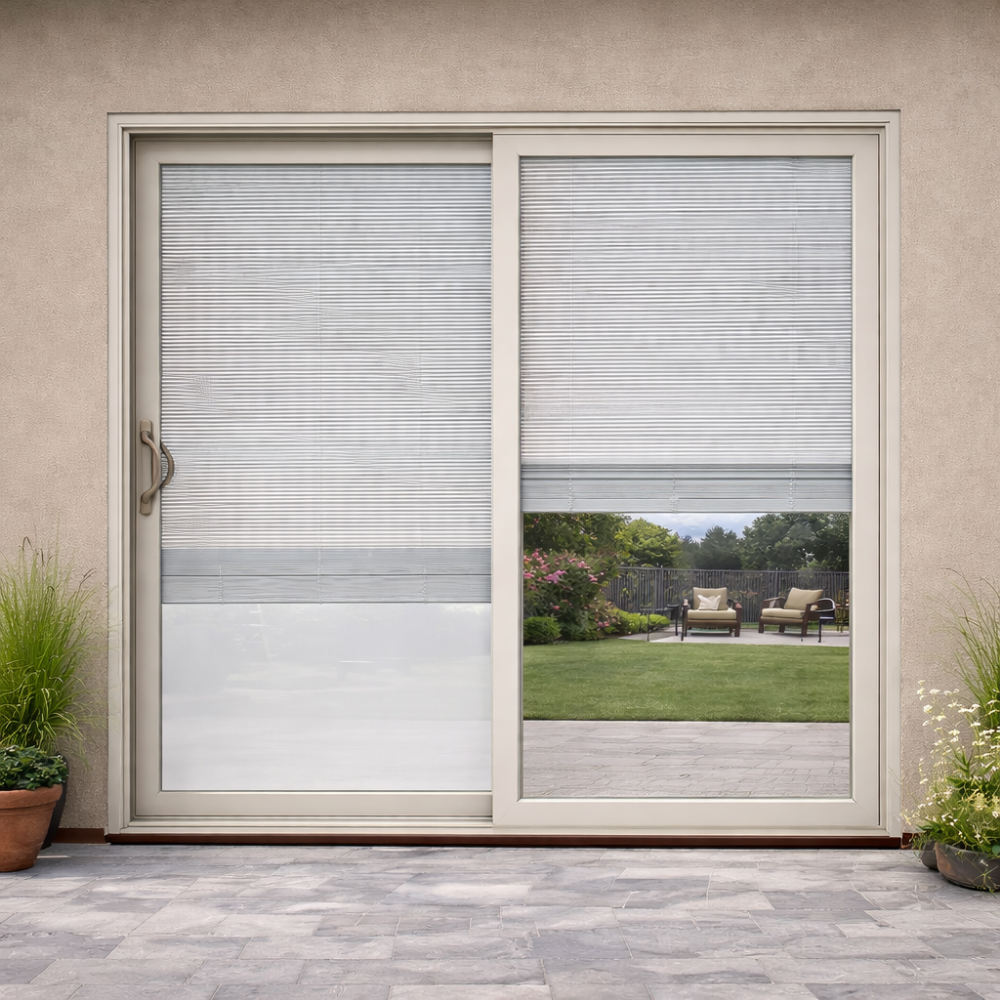
Not every room has the clearance for a traditional swing. In tight hallways or small bedrooms, a standard door can consume up to 10 square feet of usable floor space. This is where functional door design ideas like sliding systems become invaluable. While the classic barn door design ideas are still popular for rustic homes, modern iterations have moved toward sleeker, more industrial interpretations.
Think about using bypass doors for closets or pocket doors that disappear completely into the wall. One of the most effective modern applications I’ve seen involves using large-scale sliding panels as flexible room dividers. This allows a home office to remain open to the living area during the day but closed off for private meetings. It’s a versatile solution for property developers looking to maximize the perceived square footage of urban apartments.
To make the most of sliding designs, focus on these features:
- Soft-close mechanisms to prevent slamming and reduce wear.
- Top-hung tracks to keep the floor surface continuous and easy to clean.
- Recessed finger pulls for a streamlined, low-profile look.
- Sound-dampening materials to ensure privacy between divided rooms.
The next piece of the puzzle is the material choice. While wood is the traditional go-to, modern homes are increasingly incorporating metal to achieve a specific aesthetic. Put simply, the hardware and frame are just as important as the door itself. This leads us to a look that has dominated the design world for the last decade.
Glass and Steel Industrial Looks
The industrial aesthetic isn’t just for converted lofts anymore. Combining glass and steel has become one of the most sought-after bedroom door design ideas for those who want to maintain an airy, open feel while still defining separate zones. These “Crittall-style” doors use thin black steel frames and large glass panes to create a grid pattern that feels both vintage and contemporary.
What most people miss is that these doors aren’t just for interiors. They make excellent patio doors as well. The thin sightlines allow for unobstructed views of the outdoors, effectively bringing the landscape into the living room. In my experience, the key to making this look work is the quality of the welds and the finish of the steel. A powder-coated matte finish is usually the best bet for durability and fingerprint resistance.
Consider these tips for industrial-style doors:
- Use tempered safety glass to meet modern building codes.
- Experiment with different grid patterns, such as asymmetrical horizontal bars.
- Pair steel frames with warm wood flooring to balance the “cold” metal.
- Incorporate fluted glass for a vintage look that offers 60% more privacy than clear panes.
Building on that, the mix of materials provides a level of sophistication that all-wood doors lack. It creates a sense of architectural permanence. Whether you’re a builder working on a custom home or a homeowner looking for a weekend refresh, these designs offer a path toward a more curated, intentional living space.
Choose Nash Doors & Windows for Your Modern Door Solutions
The right door design ideas serve as the connective tissue of your home’s architecture. By moving away from generic options and embracing minimalist lines, bold entries, and industrial materials, you create an environment that feels cohesive and high-end. It’s about more than just a way to get from room to room; it’s about the tactile experience of your home.
If you’re ready to elevate your property’s aesthetic and value, Nash Doors & Windows can help. We specialize in providing high-quality, modern solutions that meet the rigorous demands of homeowners and trade professionals alike. From sleek interior transitions to commanding front entries, our collection is designed to withstand the elements while looking spectacular. Reach out today to see how we can bring your design vision to life.